Why Tall Curvy Women Should Buy for the Shoulders and Alter Everything Else
Quick Answer: Buy for the shoulders and the bust - the two places alterations are expensive, difficult, or impossible - and alter the waist, hem, and sleeve length, which are cheap and routine. For tall curvy women this usually means sizing up to fit the widest fixed point and having the rest taken in. A jacket that fits the shoulders and gapes at the waist is a £20 fix; one that fits the waist and pulls across the shoulders is unwearable and cannot be rescued.
Here is the full hierarchy of what can and cannot be changed.
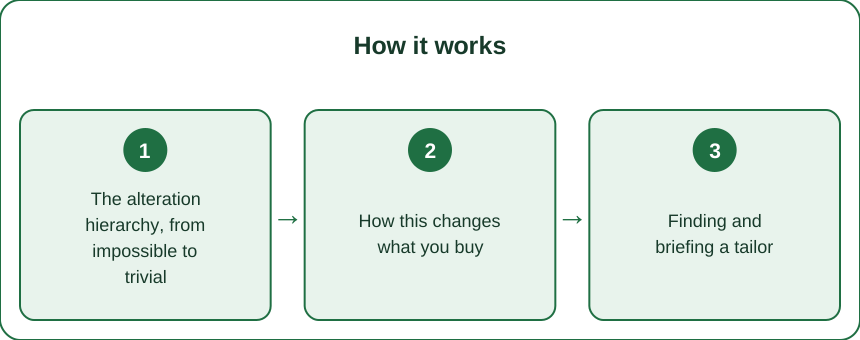
The alteration hierarchy, from impossible to trivial
Shoulders are the hardest and most expensive alteration in tailoring. Reshaping a shoulder means dismantling the sleeve head, the lining, and often the collar. On most garments it costs more than the garment, and on knitwear it is simply not possible.
Bust fitting is second hardest. Adding room across the bust requires fabric that does not exist in the garment, so it can only be let out to the width of the seam allowance - typically a centimetre or two at most.
Rise and crotch depth on trousers are difficult and rarely worth doing. This is the reason tall curvy women are told to size up in trousers, since a too-short rise cannot be lengthened.
Waist suppression is easy and cheap. Taking in the side seams or adding a back dart is standard work for any tailor and typically costs very little. This is the alteration to plan around.
Hemming is the easiest of all, provided the garment was long enough to start with - which for tall women is exactly the constraint. A tall size hemmed down is fine; a regular size cannot be lengthened past its hem allowance.
Sleeve shortening is easy on most sleeves and moderately difficult on jackets with functional cuff buttons or complex cuffs. Sleeve lengthening is limited to the existing allowance, usually two to four centimetres.
The practical rule falls out of this list: buy so that the impossible things fit, and let the easy things be wrong on the rack.
How this changes what you buy
Size up to the shoulder and bust, then expect to take in the waist. This produces a garment that fits properly rather than one that fits in the shop and pulls in wear.
Accept that things will look too big on the hanger. A jacket that fits your shoulders will look boxy at the waist before alteration, and learning to see past that is most of the skill.
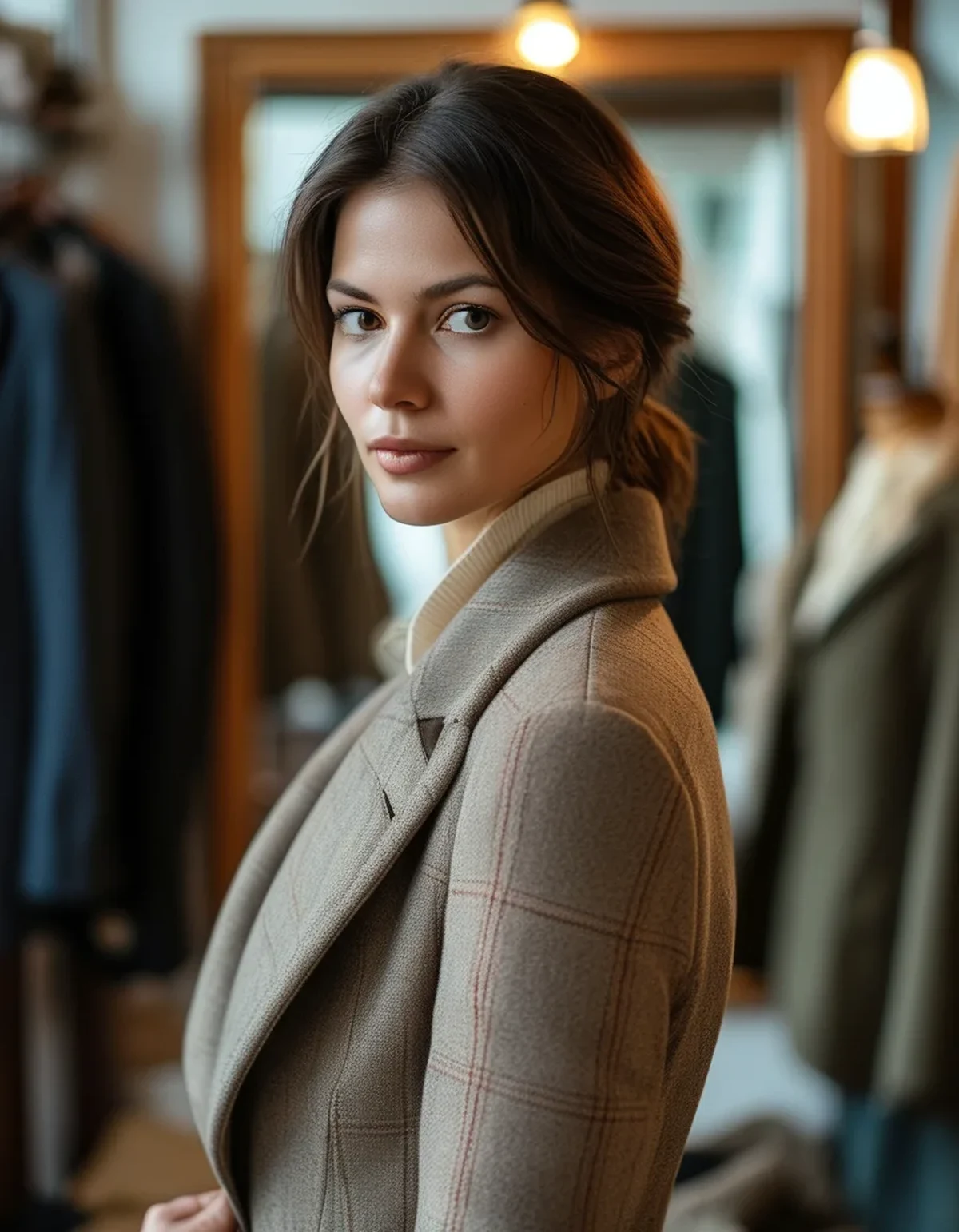
Check the shoulder seam position first, before anything else. It should sit at the edge of your shoulder bone. If it hangs down the arm or cuts inside it, put the garment back regardless of how everything else looks.
Check bust seam and dart placement second. Darts and princess seams should point at the fullest part of your bust, and on a long torso they frequently sit two to four centimetres too high - which is a difficult fix.
Then check hem and sleeve length third. These are the things people check first, and they are the ones that matter least because they are cheap to change.
Buy tall sizing where it exists, even a size up. A tall size in a larger size usually has both the vertical proportions and the width, and the waist can come in. A regular size in the right width will still be short in the torso.
And budget for alterations as part of the price. A £70 jacket plus £25 of tailoring that fits is a far better purchase than a £70 jacket that almost does and sits in the wardrobe.
Finding and briefing a tailor
Ask for a simple job first. A hem or a waist take-in tells you about their work at low cost and low risk before you hand over a coat.
Wear the shoes and the underwear you will wear with the garment. Hem length depends entirely on heel height, and bust position depends on the bra. This one thing causes most disappointing alterations.
Be specific about what you want, not about how to do it. Say where you want the hem to fall and how much room you want at the waist. The method is their expertise, and prescribing it usually goes badly.
Ask what is possible before assuming. Some garments have generous seam allowances and can be let out substantially; some have almost none. A good tailor will tell you in thirty seconds.
Have multiple garments done at once. Most tailors will do a batch more cheaply than four separate visits, and it makes the habit economical rather than an occasional splurge.
Keep a note of your finished measurements. Once a jacket fits, measure it flat and write the numbers down. Those numbers make future online shopping far more accurate than any size chart.
And do not alter fast fashion. The construction rarely justifies it, and the fabric often will not survive the process. Alterations pay off on well-made garments.
What Nobody Tells You About Buying for Fixed Points
Stretch fabrics hide shoulder problems until they do not. A stretch blazer can fit across the shoulders while standing and pull sharply the moment you reach forward - which is precisely when it matters.
Vertical proportion is a fixed point too, and people forget it. For tall women, armhole depth and the position of the waist seam are effectively unalterable, and both determine whether a garment reads as fitted or as wrong.
Knitwear cannot be altered meaningfully. Cut knits fray and lose structure. For jumpers and cardigans the fit you buy is the fit you have, which is why tall sizing matters even more in knitwear than in woven garments.
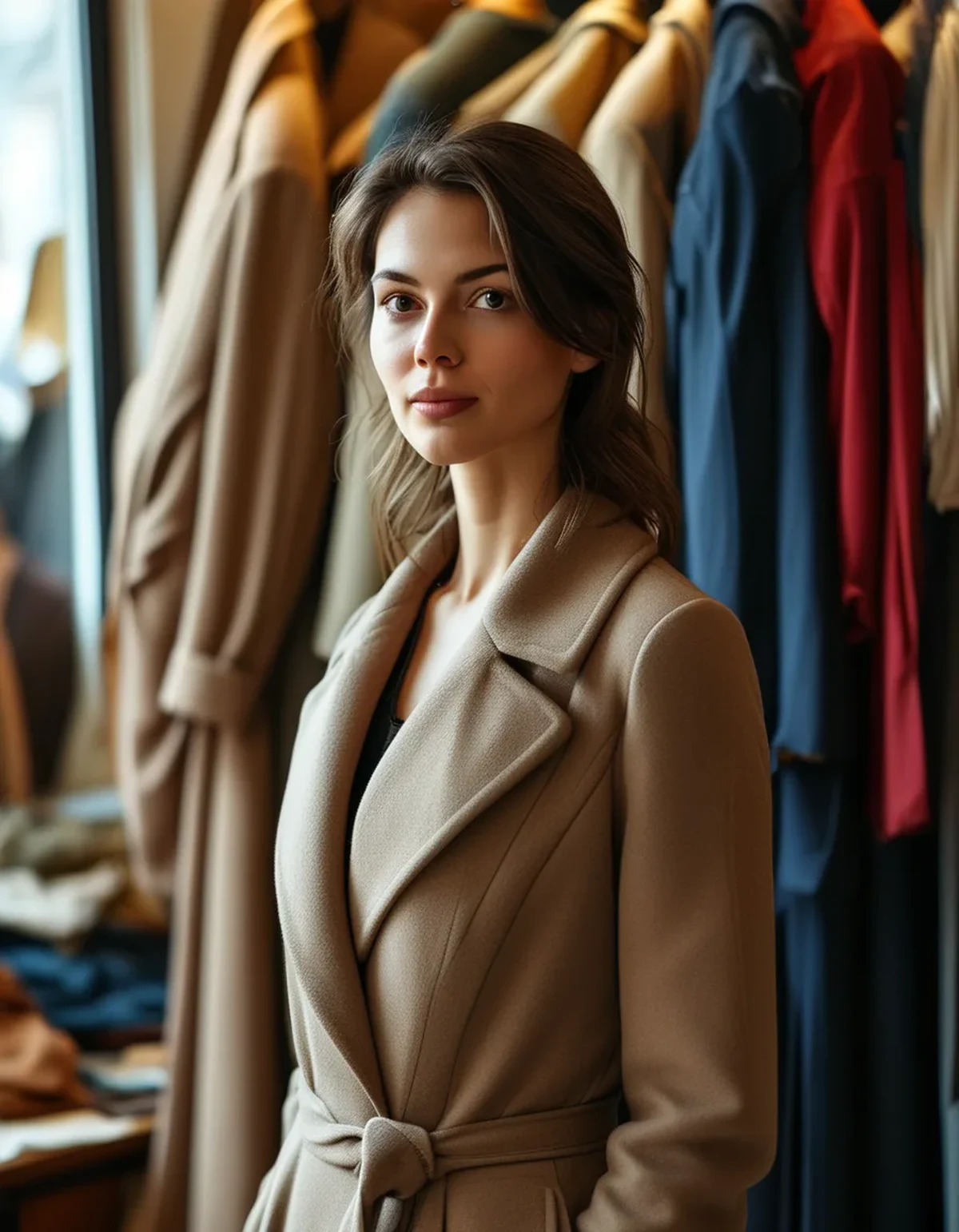
Coats are the highest-value alteration in a tall curvy wardrobe. They are expensive, worn constantly, and sleeve length and waist shaping are both routine work - so a coat bought for the shoulders and altered is exceptional value.
Some brands cut a size-up as a proportionally different shape, not just a bigger one. Sizing up sometimes gives you a longer rise and a deeper armhole as a bonus, which is exactly what a tall curvy frame wants.
Second-hand shopping works better with this approach than it does otherwise. You are looking for shoulders and vertical proportion, which are visible on the rail, and the rest is fixable at low cost.
And autumn is the right time to do this. Coat and blazer season is starting, and a tailor in early September is far less busy than one in late November.
FAQ: Buying and Altering for a Tall Curvy Frame, Answered
What should I never compromise on when buying?
Shoulders and bust. Shoulder alterations are the most expensive and difficult in tailoring, and bust room can only be let out as far as the seam allowance - usually a centimetre or two.
What is cheap and easy to alter?
Waist take-ins, hems, and most sleeve shortening. These are routine jobs, so let them be wrong on the rack and plan to have them done.
How do I check shoulder fit quickly?
The shoulder seam should sit at the edge of your shoulder bone - not down the arm and not inside it. Check this before anything else, and put the garment back if it fails.
Should I size up as a tall curvy woman?
Often yes, especially in structured garments. Size up to fit the shoulders and bust, then have the waist taken in. In some brands a larger size also gives a longer rise and deeper armhole.
Can knitwear be altered?
Not meaningfully. Cut knits fray and lose structure, so the fit you buy is the fit you have. This is why tall sizing matters even more in knitwear than in woven pieces.
What should I bring to a fitting?
The shoes and the underwear you will actually wear with the garment. Hem length depends on heel height and bust position depends on the bra - skipping this causes most disappointing alterations.
Is it worth altering inexpensive clothes?
Usually not. The construction rarely justifies the cost and the fabric often will not survive it. Alterations pay off on well-made garments, particularly coats, which are worn constantly and are routine to adjust.
TL;DR:
- Buy for the fixed points: shoulders and bust. Shoulder alterations are the most expensive in tailoring; bust room is limited to seam allowance.
- Alter the easy things: waist take-ins, hems, sleeve shortening. All routine and cheap.
- Check in this order: shoulder seam at the edge of the bone, then bust dart position, then hem and sleeve length.
- Expect it to look boxy on the hanger. A jacket that fits your shoulders will look big at the waist before alteration.
- Tall size, sized up, beats regular size in the right width - vertical proportion cannot be added.
- Knitwear cannot be altered. The fit you buy is the fit you have.
- Bring the actual shoes and bra to the fitting. Skipping this ruins more alterations than anything else.
Coats are the highest-value alteration in a tall curvy wardrobe, and early September is when tailors are least busy.
Keep Reading
This article is for general informational and styling purposes only. Fit, sizing, and product availability may vary.