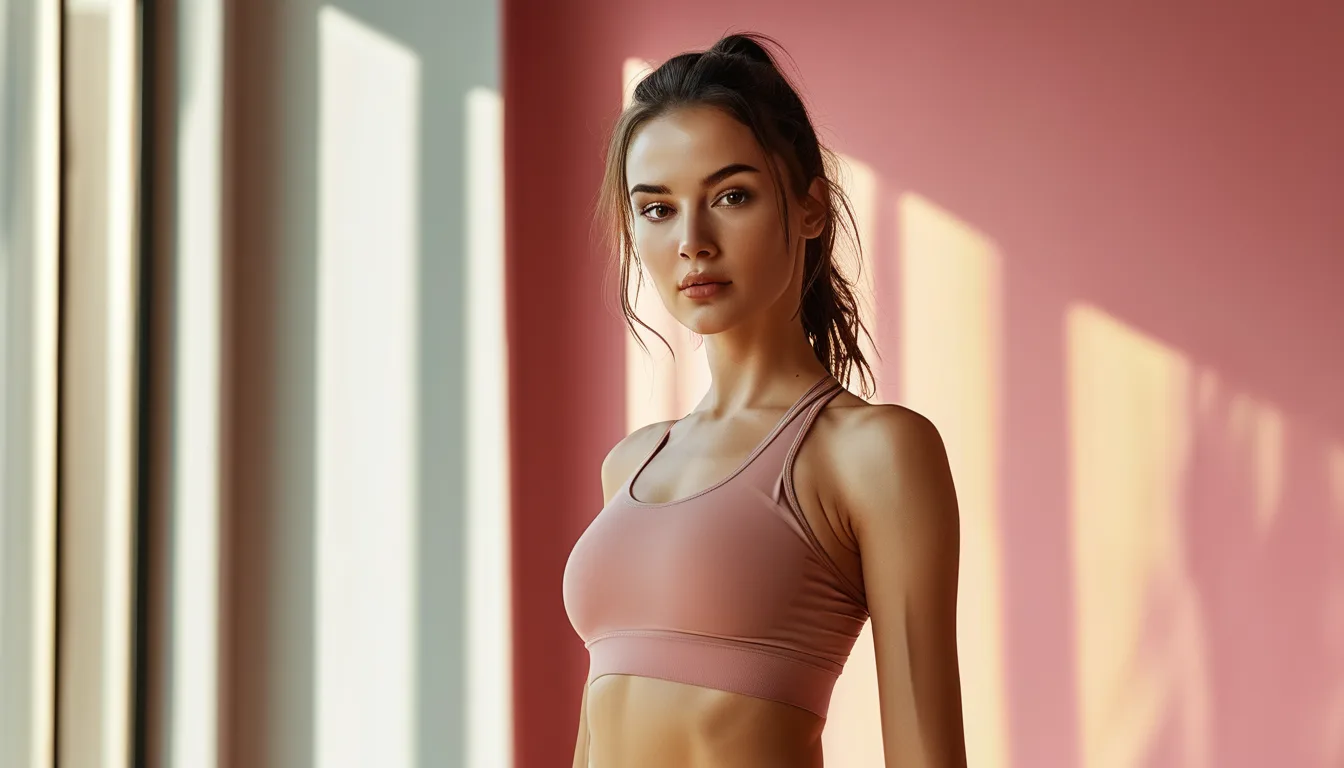
Why Sports Bras Fail Tall Curvy Women in the Torso, Not the Cup
Quick Answer: Sports bras are drafted on an average-height fit model, so the distance from shoulder to underbust is fixed into the garment — and on a long torso that distance runs out. The straps reach their limit before the band reaches your ribcage, so the band rides up, the cups tilt away and gap, and the digging starts at the shoulders because they are carrying load the band was meant to hold. The cup size was never the problem. The fixes are strap range, longline bands, and a fit test that checks torso length specifically.
Here is what is actually failing, and what to buy instead.
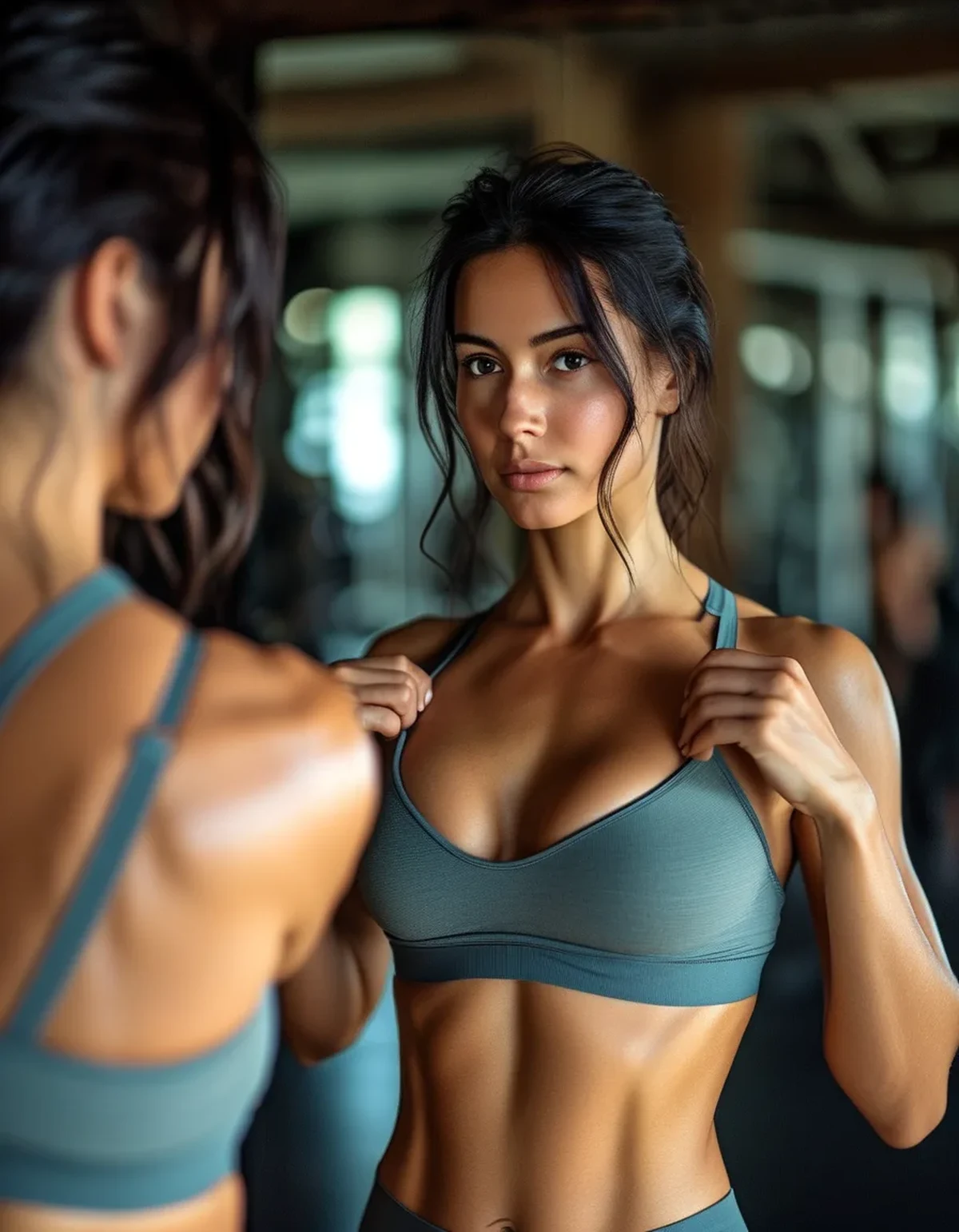
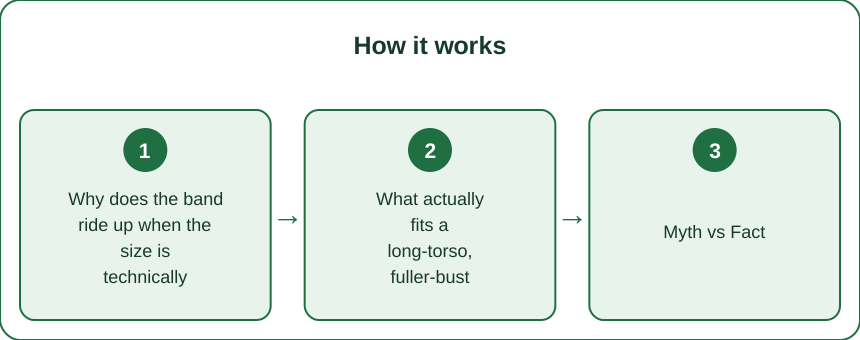
Why does the band ride up when the size is technically right?
Because a bra is a frame, and the frame was built for a shorter building.
The band does most of the work in any bra — support comes overwhelmingly from the band anchoring level on the ribcage, not from the straps. Straps are stabilisers. That is the fit-theory headline, and it is exactly what a long torso breaks.
Every bra has a fixed vertical geometry. The distance from the top of the strap to the bottom of the band is set by the pattern — drafted on a fit model of average height with an average shoulder-to-underbust length. On a longer torso, that vertical span is simply too short. Something has to give, and it is always the band position: the straps pull the whole frame upward until the band sits above the underbust crease, riding on soft tissue instead of anchoring on the ribcage.
A riding band sets off the whole failure chain. The band tilts, so the cups angle away from the body and gap at the top even though the cup volume is right. Support collapses, so bounce increases. The straps inherit the load the band dropped, and shoulder grooves and neck tension follow. On fuller busts the load is bigger, so every link in the chain fails harder.
Racerbacks make it worse, not better. Pulling the straps toward the centre shortens the effective vertical span further — which is why the sportiest-looking style is often the worst-fitting one on a tall frame.
Size up the cup and none of this changes, because nothing was wrong with the cup.
What actually fits a long-torso, fuller-bust frame?
Hunt for vertical adjustability and band real estate — four features, in priority order.
1. Straps with genuine adjustment range. Not decorative sliders — straps that lengthen enough to let the band sit level at the underbust with slack to spare. When shopping online, reviews mentioning straps ran out or adjusters at maximum are your long-torso warning system. Fully adjustable front-or-back sliders are the single most valuable feature on the garment.
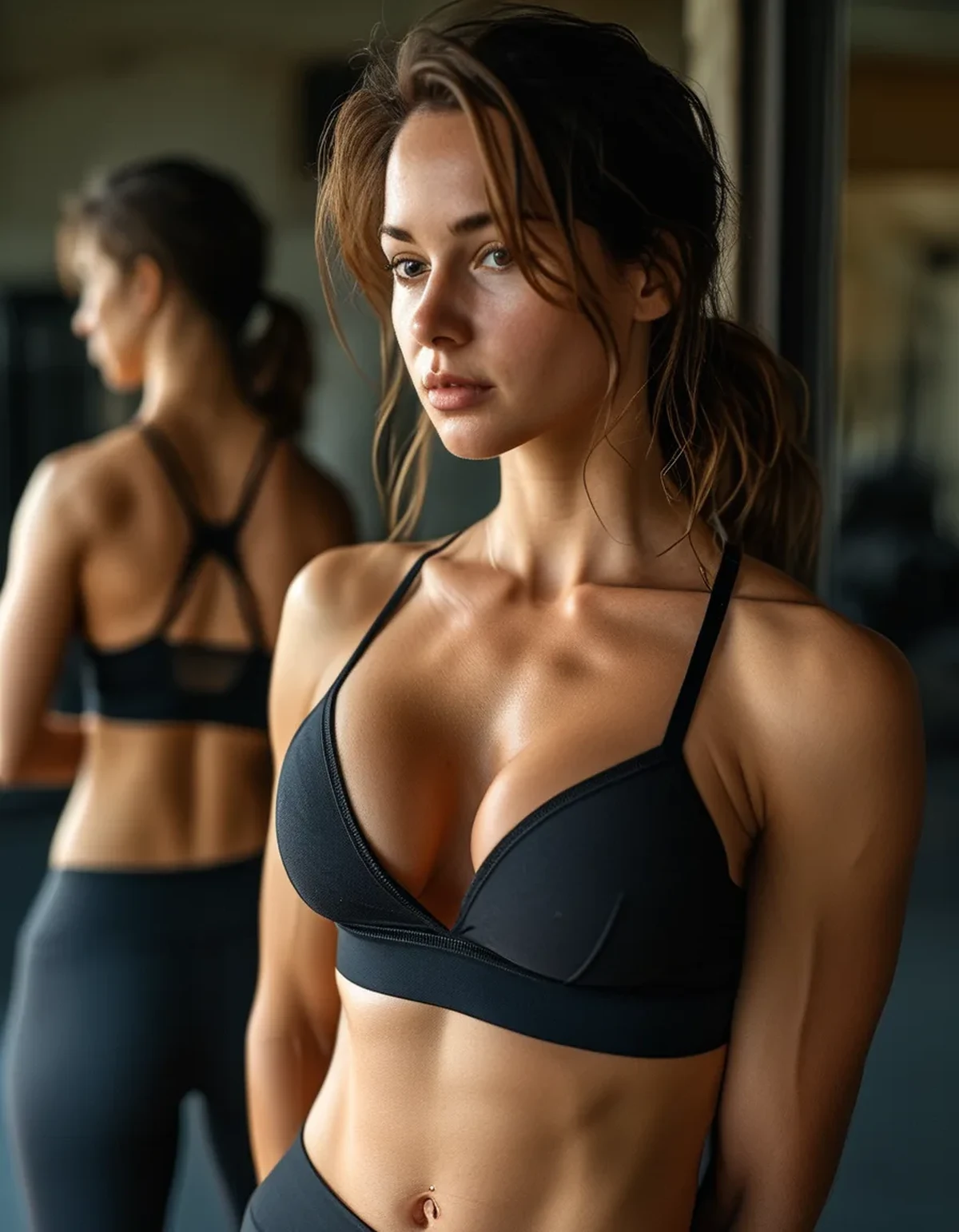
2. Longline bands. A longline sports bra extends the band several inches down the ribcage, which does two things for a tall curvy frame: it distributes the anchoring load over more surface, and it makes band position self-stabilising — a longline physically cannot ride to the collarbone. The extra length also bridges the midriff gap that standard bras leave on long torsos, which solves the exposed-strip problem with high-waisted leggings at the same time.
3. Cup-and-band sizing rather than S-M-L. Fuller busts need the cup volume and the band tension chosen separately; compressed-alphabet sizing forces a compromise on both. Encapsulation styles — real cups — beat pure compression for bounce control at fuller volumes, and combination encapsulation-compression styles are the workhorse.
4. A wide, firm underband with a soft edge. Width spreads pressure; firmness anchors. The band should grip level without folding — a folding band is a band being dragged somewhere it does not fit.
The try-on test that catches torso-length failure specifically: fasten, adjust straps, then raise both arms overhead and do five slow jumps. If the band climbs and stays climbed, the vertical geometry is wrong — put it back regardless of how the cups looked standing still.
Myth vs Fact: Sports Bra Fit
Myth: If the band rides up, buy a smaller band. Fact: On a long torso the band rides because the straps ran out of length, not because the band is loose. A smaller band on the same short frame digs and still rides. Fix the vertical — strap range or a longline — before touching the band size.
Myth: Straps should carry the weight — tighten them for support. Fact: The band should do the overwhelming majority of the work. Cranking straps to compensate for a misplaced band is exactly how shoulder grooves and neck pain happen, and on a fuller bust the damage arrives faster.
Myth: High-impact bras are just tighter. Fact: Real high-impact support comes from structure — encapsulation, band architecture, strap geometry — not compression strength. A crushing medium-impact bra is worse than a well-structured high-impact one at every size.
Myth: Sports bras are supposed to be uncomfortable if you are busty. Fact: Digging, welts, and shoulder pain are fit failures, not the price of support. The right vertical geometry feels firm and forgettable at the same time.
Myth: One good bra solves it. Fact: Elastic needs recovery time between wears, and a fuller-bust bra works hard. A rotation of two or three, washed cold and air-dried, outlasts and outperforms a single heroic favourite by years.
How do you build a rotation that actually lasts?
Buy in threes, wash like they cost what they cost, and retire on evidence.
Rotate three: two workhorses and one backup. Alternating wears lets elastane recover its snap between sessions — the same pair worn daily ages roughly twice as fast. For a fuller bust the stakes are higher because a fatigued band is a support failure, not just a comfort one.
Wash cold, clasp closed, in a mesh bag, and never machine-dry. Heat is the murderer of elastic. Air-dry flat or hung by the band — not by the straps, which stretches the exact component your long torso depends on.
Know the retirement signs: the band no longer anchors on the loosest hook it once needed the tightest for, straps at maximum extension that used to sit mid-range, or bounce you notice again on a bra that used to be silent. An underperforming bra whispers before your shoulders shout — believe the whisper.
Pair the frame deliberately. Longline bands layer cleanly under fitted tanks and pair with high-waisted leggings without the midriff gap standard bras leave on long torsos; a matching set cut for tall proportions reads intentional rather than improvised. Buttery-soft fabrics feel wonderful but hold less firmly at the band — keep the plush finishes for studio days and the firm knits for impact days.
And measure yourself twice a year. Band and cup drift with training, weight, and time, and the long-torso problem interacts with both numbers. Ten minutes with a soft tape — snug underbust, relaxed fullest point — keeps the next purchase from being a rerun of the last guess.
A sports bra that fits a tall curvy frame exists. It is found by checking the measurement most brands never mention — the length of you.
FAQ: Long-Torso Sports Bra Questions, Answered
How do I know my problem is torso length and not band size?
Run the overhead-reach and jump test. A band that starts level and climbs — with straps already at or near full extension — is a vertical-geometry failure. A band that digs while staying level is a circumference issue. Climbing means longline or longer straps; digging means resize.
Are longline sports bras supportive enough for running with a fuller bust?
A longline alone is not the support — structure is. Look for longline styles with encapsulation cups and adjustable straps rated high-impact. The longer band adds anchoring stability that tall frames specifically lack, so a well-structured longline often outperforms a standard high-impact bra on a long torso.
Why do racerback styles hurt my shoulders specifically?
Racerbacks shorten the vertical span and centre the load on a smaller strap area. On a long torso they run out of length soonest, shifting weight to the shoulders hardest. Choose adjustable H-back or crossback styles with real strap range instead.
Is it worth sizing up the band to get more length?
No — band size is circumference, not height, so sizing up just loosens the anchor without adding vertical room. The length you need comes from strap adjustability and longline construction, never from a bigger number.
TL;DR:
- Sports bras have a fixed shoulder-to-band vertical span drafted on average height, and a long torso runs past it — so the band rides up and the cups tilt and gap while the cup size takes the blame.
- Support lives in a level, anchored band; once it rides, straps inherit the load and shoulders pay.
- Buy for the vertical: straps with real adjustment range, longline bands, cup-and-band sizing, and encapsulation for fuller busts — then test with overhead reaches and jumps.
- Rotate three, wash cold, air-dry, and retire on evidence; pair longlines with high-waisted leggings to close the tall midriff gap.
Re-run the jump test on every bra you own this week. The ones that climb were never your size — they were your height’s.
See It in Motion
Seen here: High Waist Embossed Yoga Leggings with Side Pockets — shop it on bubblelime.com
Keep Reading
This article is for general informational and styling purposes only. Fit, sizing, and product availability may vary.