Why a Tall Curvy Jacket That Buttons Still Pulls Across the Back
Quick Answer: Jacket sizing is driven by the bust measurement, but the constraint on a tall curvy frame is usually cross-back width and armhole height, which do not scale with bust size at the same rate. A jacket can close comfortably at the front and still be several centimetres short across the shoulder blades — which is what produces the horizontal pull lines, the restricted reach and the sleeves that ride up.
It buttons. It looks fine standing still with your arms down.
Then you reach for something and the whole back seizes up.
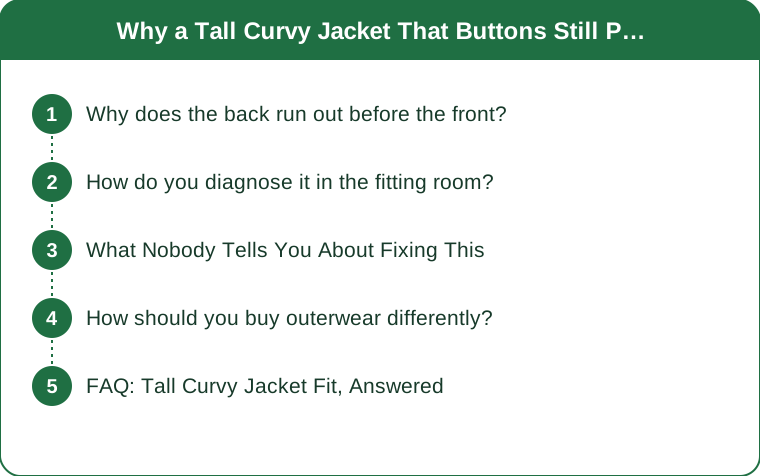
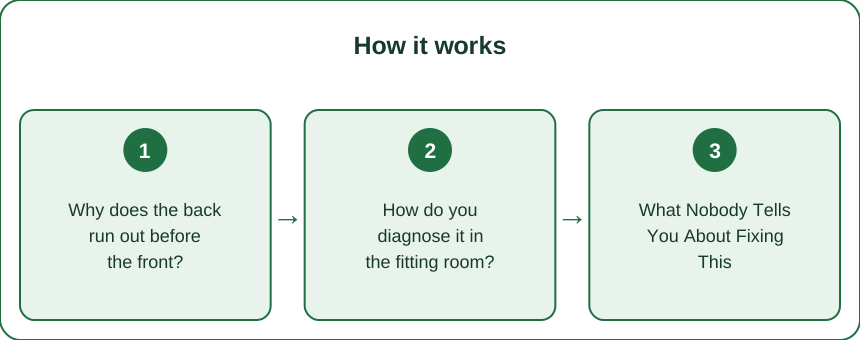
Why does the back run out before the front?
Because of how patterns are graded, which is to say, uniformly when bodies are not.
Grading is the process of scaling a base pattern up and down through the size range. A base size is drafted properly, then each subsequent size adds a set amount at specified points. The amounts are derived from average measurement relationships across a size survey.
Two things go wrong for a tall curvy frame. First, the base pattern was drafted on a fit model of average height, so all the vertical proportions — armhole depth, shoulder to bust point, waist position — belong to a shorter torso. Grading up adds width but only a small amount of length, so the vertical measurements fall behind quickly.
Second, cross-back width correlates with frame size rather than with bust size, and a tall frame has a wider skeletal back at any given bust measurement. When you size up to accommodate the bust, you get a jacket that gains most of its extra width at the front and side seams, where the grading rules put it.
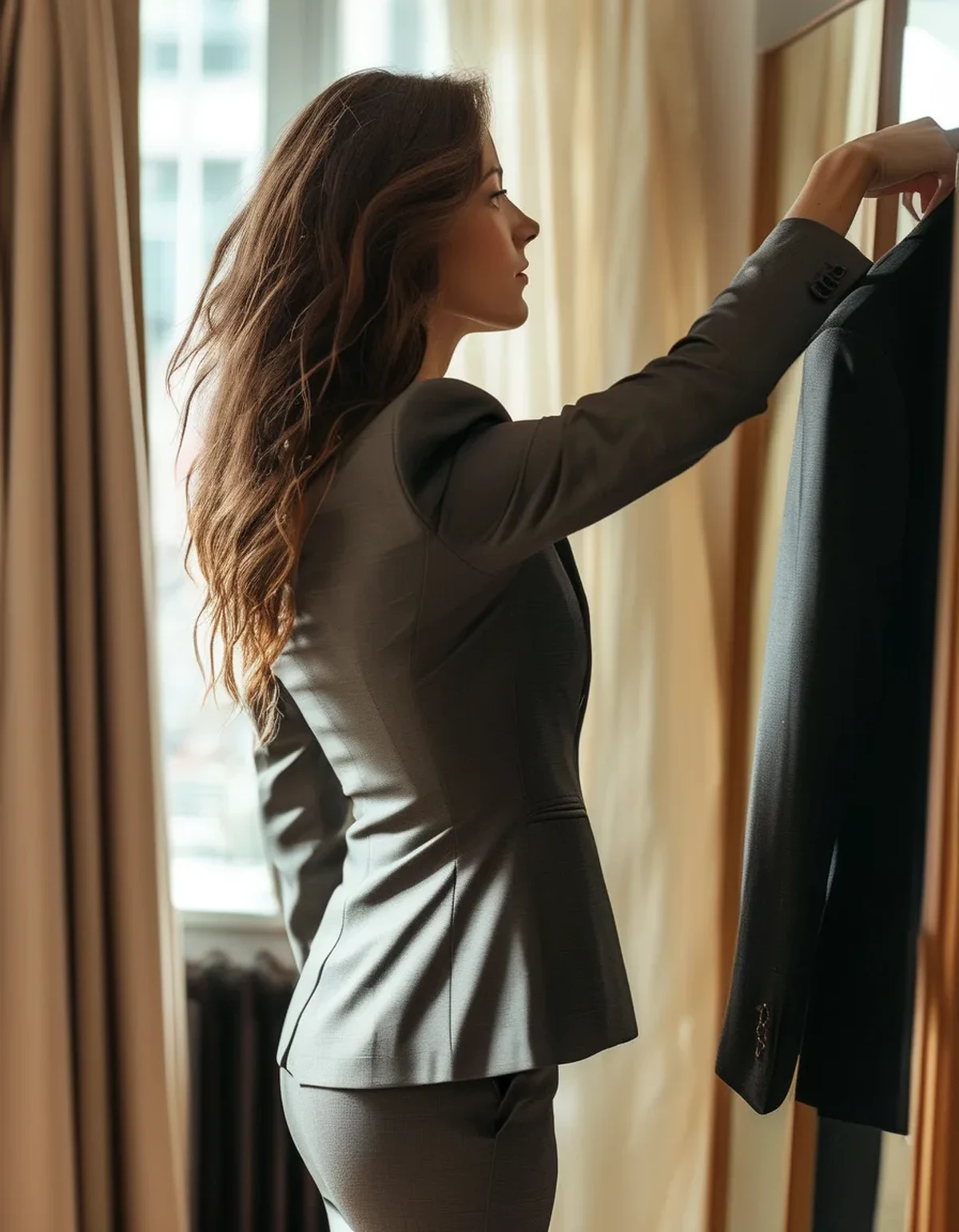
The result is the specific failure people describe: buttons fine, feels tight across the shoulder blades, sleeves pull up when you reach forward, and the whole jacket lifts at the hem when you move your arms.
The armhole is the real culprit more often than the back panel. A high, small armhole on a frame with a longer torso and a broader back means the sleeve is anchored too tightly and every arm movement drags the body of the jacket with it.
How do you diagnose it in the fitting room?
Four checks, in this order, and all of them before you look at the front.
The hug test. Cross your arms and reach for opposite shoulders. If the back pulls hard, seizes, or lifts the hem, the cross-back or the armhole is too small. This one movement identifies the problem in most jackets.
The steering wheel test. Extend both arms forward at chest height. Sleeves that ride up more than an inch or two, or a jacket that pulls open at the front when you do this, is the same problem.
Look at the pull lines. Horizontal creases across the upper back mean the back is too narrow. Diagonal creases from the armhole toward the shoulder blade mean the armhole is the constraint. Vertical folds down the back mean it is too wide, which is a much easier problem.
Check where the shoulder seam lands. It should sit at the outer edge of your shoulder joint. Falling off the edge means the jacket is too big through the shoulders and you are compensating for the back width by sizing up — a common trap that produces a jacket that is simultaneously too big and too tight.
And check the armhole height directly. Put a finger between your armpit and the seam. Almost no room means the armhole is too high for your torso length, which is extremely common on a long torso regardless of size.
What Nobody Tells You About Fixing This
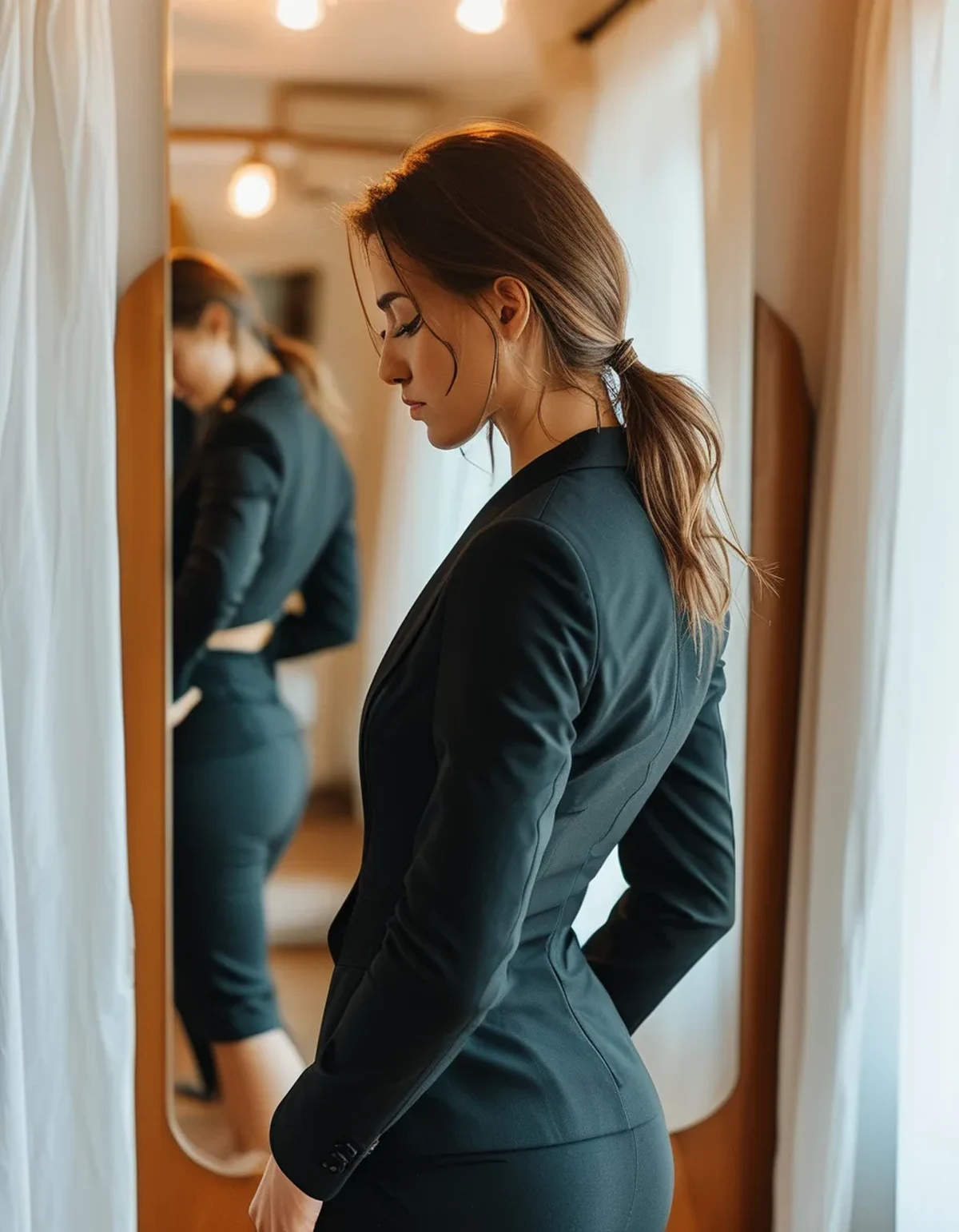
Back width cannot be let out on most jackets. There is rarely enough seam allowance in a centre back seam to add meaningful width, and it is the single most expensive alteration to attempt. This is why the fitting room check matters so much — it is the one problem you cannot buy your way out of afterwards.
Armholes can be lowered, and it is a cheap alteration. Dropping an armhole by a centimetre or two transforms the reach of a jacket, and most tailors consider it routine. Buying a jacket that fits everywhere except the armhole is a good purchase; buying one that fits everywhere except the back is not.
Sizing up for the back is usually the wrong move. It gets you the back width at the cost of a shoulder seam falling off your shoulder, a dropped bust point and a jacket that looks borrowed. The better approach is to buy for the shoulders and back, and have the waist and sleeves brought in — those are straightforward alterations.
Look for design features that solve it structurally. A back vent that starts higher, an action pleat or a bi-swing back, a raglan or drop-shoulder construction, and knit or ponte fabrics all handle a wider back without any alteration. These are not compromises; they are how outerwear designed for movement has always been built.
Stretch woven fabrics disguise the problem rather than solving it. A jacket with 2% elastane will button and will feel acceptable while it fights you, and it will develop permanent stress marks at the shoulder blades within a season.
Tall-specific jacket ranges usually add sleeve and body length without adding cross-back. This is the most disappointing discovery in tall shopping, and it is why a tall size can still pull across the back. Check the cross-back measurement in the size guide rather than assuming the tall version has addressed it.
How should you buy outerwear differently?
By reordering the priorities, and by moving the timing.
Buy for the shoulders and back, alter everything else. This is the standard tailoring principle and it applies with unusual force here, because shoulders and back are the two things that cannot be altered and everything else can.
Measure your cross-back once and carry the number. From the bony point at one shoulder, across the back, to the other — measured with your arms relaxed. Any size guide that lists it can be checked before you order, which removes most of the failed online purchases.
Consider menswear cuts for casual outerwear. Men’s jackets are drafted with more cross-back at a given chest measurement, which is exactly the proportion difference in question. It is a genuinely useful option for parkas, overshirts and casual blazers, less so for anything fitted at the waist.
Buy autumn outerwear in late summer. Tall sizing and larger sizes both sell through earliest, and the intersection of the two sells out first of all. The stock available in August is not the stock available in November, and this is the single most practical piece of timing advice in tall shopping.
Budget for the alteration when you buy. A jacket that fits the shoulders and needs the waist taking in is a good buy at full price plus alteration cost, and a better one than a jacket that fits off the rack everywhere except the back.
And accept that layering underneath changes the calculation. A coat that fits perfectly over a shirt will fail every one of the movement tests over a jumper. Try winter outerwear over what you will actually wear under it, which in late summer means bringing a jumper to the shop and looking slightly mad.
FAQ: Tall Curvy Jacket Fit, Answered
Is a size up ever the right answer for back width?
Occasionally, when the brand grades generously across the back and you are prepared to have the shoulders, waist and sleeves all altered. It is an expensive route and it works best with unstructured jackets. For anything tailored, finding a brand with a wider cross-back grade is a better use of effort.
Why do my jackets feel fine in the shop and tight after a few wears?
Usually because the shop try-on was standing still, over a thin top, without a bag. Real wear adds a shoulder strap, a layer underneath and a great deal of reaching. Always do the hug and steering wheel tests, and always over a realistic layer.
What single measurement should I check before ordering online?
Cross-back, if the brand publishes it. It predicts jacket fit better than bust, and it is the one that cannot be fixed later. Sleeve length is the next most useful, and then the back length from the nape — which tells you whether the waist seam will land anywhere near your waist.
TL;DR:
- Pattern grading adds width at the front and sides, so cross-back width and armhole height run out before the buttons do.
- Diagnose with the hug test and the steering wheel test, and read the pull lines: horizontal means back width, diagonal means armhole.
- Back width is essentially unalterable; armholes can be lowered cheaply — so buy for the back and shoulders and alter the rest.
- Look for action pleats, bi-swing backs, raglan sleeves and knit fabrics, and check cross-back in the size guide before ordering.
- Buy autumn outerwear in late summer, and try it over the layer you will actually wear.
The reason this fit failure is so persistent is that the buttoning test is the one everybody uses and the one that tells you least. Two seconds of crossing your arms in a fitting room gives you more information about whether you will wear a jacket than an hour of looking at it in the mirror standing still.
Keep Reading
This article is for general informational and styling purposes only. Fit, sizing, and product availability may vary.