The Legging Fit Problem Tall Curvy Bodies Deal With That Sizing Charts Miss
Quick Answer: Most size charts scale rise length and hip curve together as if height and curve always increase in lockstep — but tall curvy bodies frequently need more hip room than their height-based size suggests, and more rise length than their hip-based size suggests. That mismatch is what causes crotch fit problems even in a ‘tall’ labeled legging.
You size up for your hips, and the length becomes wrong. You size up for your height, and the waist gapes. Somewhere in the middle, the crotch seam sits wrong no matter which size you pick — and that’s a sizing chart design problem, not something you’re doing wrong.
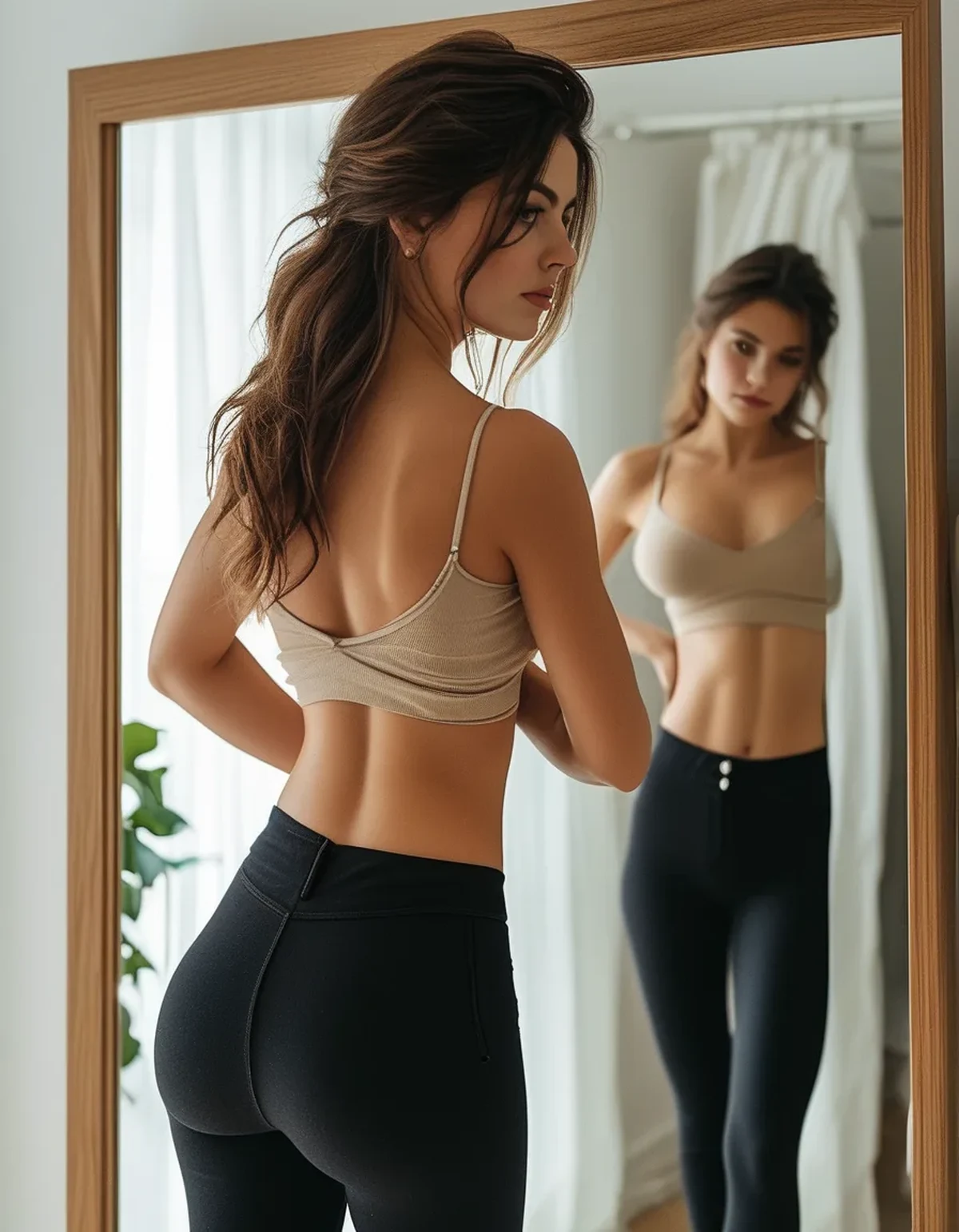
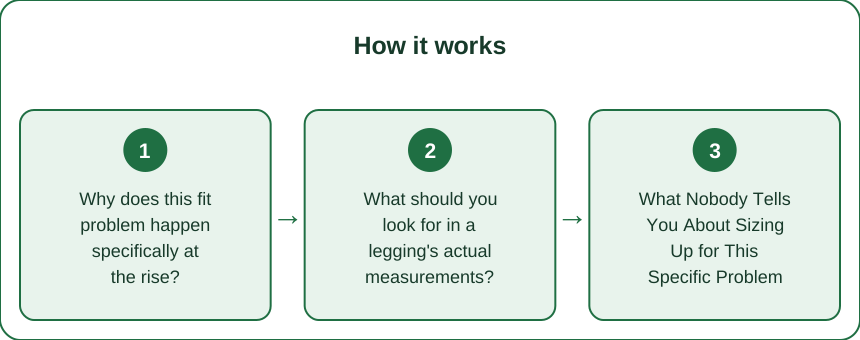
Why does this fit problem happen specifically at the rise?
Because most size charts are built around an assumed proportional relationship: taller generally means proportionally longer legs and torso, curvier generally means proportionally wider hips, and the chart assumes these two traits scale together predictably. Tall curvy bodies frequently break that assumption — the combination isn’t rare, but it isn’t what most charts were built around.
The rise (the seam that runs from front waistband to back waistband, under the body) is where this mismatch shows up most, since it has to accommodate both the hip curve and the leg length simultaneously, and most size charts only really solve for one or the other well.
What should you look for in a legging’s actual measurements?
Beyond the size label, look specifically for a listed rise measurement, not just waist, hip, and inseam. A longer rise measurement relative to the inseam is often the real indicator of a better fit for tall curvy bodies, more so than inseam length alone.
Brands that separate ‘curvy’ and ‘tall’ as two different fit dimensions, rather than folding curve into a single overall size number, tend to produce a better outcome when you genuinely need both adjustments simultaneously.
What Nobody Tells You About Sizing Up for This Specific Problem
Sizing up to solve a rise problem often solves the crotch fit but creates a new problem: excess fabric at the waist and knee that then needs to be addressed separately, often through a drawstring, elastic adjustment, or accepting a slightly looser overall fit than a true tall-curvy cut would give you.
This is a real trade-off, not a failure on your part — until more brands separate curve and length as distinct sizing dimensions, some degree of compromise is often part of the process, even with careful shopping.
Are there brands or fits that handle this better?
Brands offering separate curve and tall size lines (rather than one combined size number) tend to fit this body type more accurately, since you can effectively select for both dimensions independently rather than compromising on one to get the other. High-rise styles specifically, more than mid-rise, tend to have more room built into the rise measurement generally, which can help even in brands without dedicated curvy-tall lines.
Reading actual customer reviews that mention body type specifically, rather than relying on the size chart alone, is often more reliable for this particular combination than for more ‘average’ proportioned bodies, since chart-based sizing is exactly where the gap shows up.
FAQ: Tall Curvy Legging Fit Questions, Answered
Should I size for my hips or my height first?
Neither reliably solves the rise problem alone — prioritize a listed rise measurement over either single dimension when it’s available, since it’s the more direct indicator of fit for this specific issue.
Does high-rise always fit better than mid-rise for this body type?
Not universally, but high-rise styles do tend to have more built-in rise room across most brands, making it a reasonable default starting point.
Is it worth paying more for brands with dedicated curvy-tall lines?
For leggings specifically, often yes — this is one of the categories where dedicated sizing tends to produce a meaningfully better, less compromised fit than a standard size chart.
TL;DR:
- Standard size charts assume height and curve scale together — tall curvy bodies often break that assumption
- The rise measurement, not just waist/hip/inseam, is the real indicator of fit for this issue
- Sizing up solves the crotch fit but can create new waist and knee excess
- Brands with separate curve and tall size lines tend to fit this combination more accurately
Look past the size label to the actual rise measurement — it’s the single most useful number for solving this specific fit problem.
See It in Motion
Seen here: Super High Waist Embossed Yoga Leggings with Inner Pocket — shop it on bubblelime.com
Keep Reading
This article is for general informational and styling purposes only. Fit, sizing, and product availability may vary.